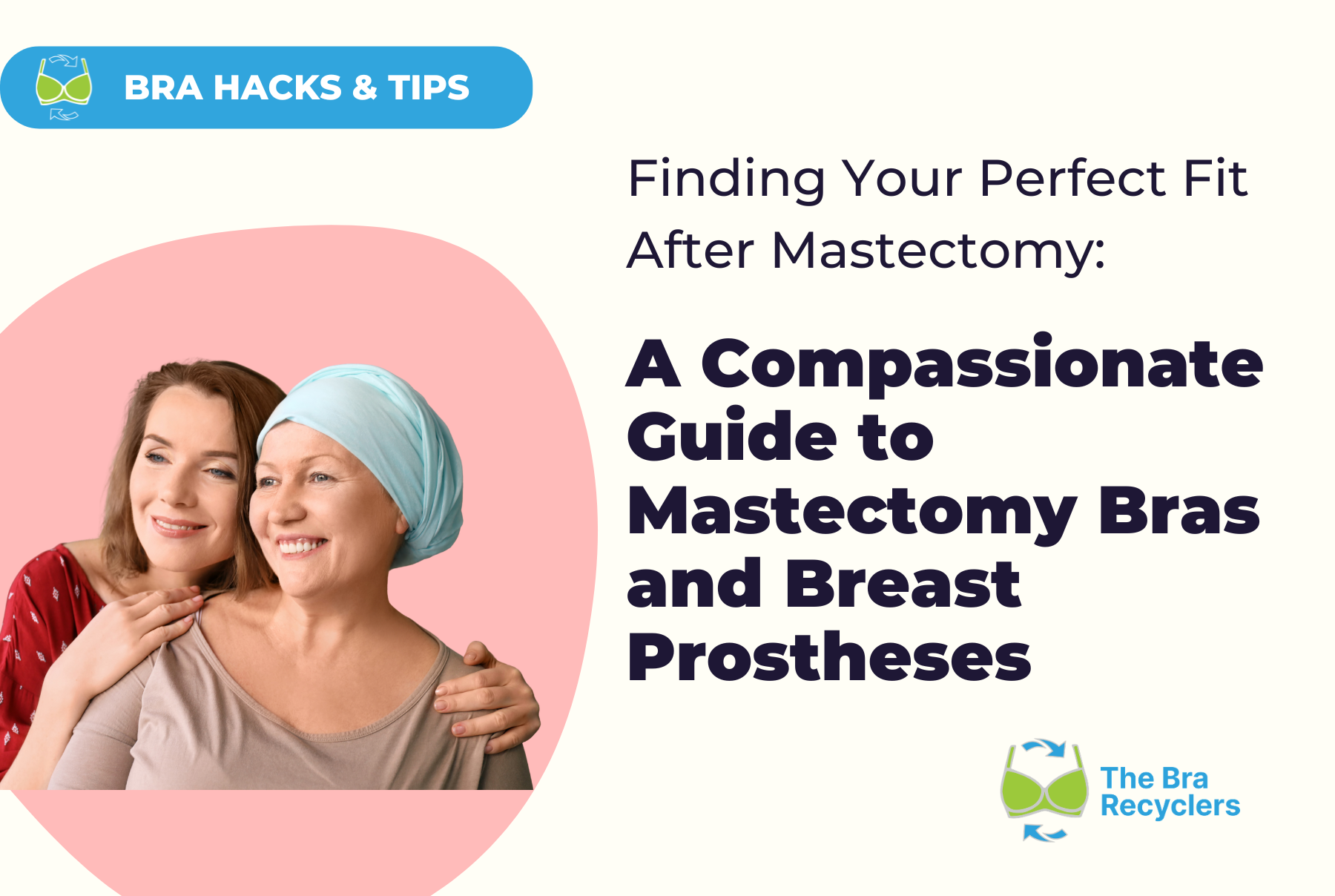
Finding Your Perfect Fit After Mastectomy: A Guide to Mastectomy Bras and Breast Prostheses
Can I be real with you for a moment?
If you or someone you love has gone through a mastectomy, you already know that the journey doesn't end when you leave the hospital. There's healing to do — physically, emotionally, and yes, even in something as seemingly small as figuring out what to wear. And when it comes to bras after a mastectomy, that "small thing" can feel anything but small.
Finding a bra that fits your changed body, feels comfortable against healing skin, and makes you feel like you again — that matters deeply. Dignity is not a luxury. It's a necessity. And it starts with feeling good in what you're wearing every single day.
That's why I wanted to put together this guide — not a clinical checklist, but a real, honest, caring walkthrough of everything you need to know about mastectomy bras and breast prostheses. Whether you're newly post-surgery, months into your recovery, or supporting someone you love through this journey, I hope this helps you take the next step forward with confidence.
First Things First: Give Yourself Grace
Before we get into the practical stuff, I want to say this clearly: there is no "right" way to feel after a mastectomy. Some women want to restore symmetry as quickly as possible. Others feel most comfortable going flat. Some want a prosthesis. Others prefer a softie or nothing at all. All of these are completely valid, beautiful choices — and the right fit is whatever makes you feel most like yourself.
This guide is here to give you information, not prescribe a path. You get to decide.
What Is a Mastectomy Bra and Why Does It Matter?
A mastectomy bra looks similar to a regular bra on the outside, but it has one key feature that makes all the difference — soft interior pockets designed to hold a breast form or prosthesis securely in place. These pockets prevent shifting, provide balance, and protect sensitive skin.
Beyond the pocket, mastectomy bras are designed with recovery in mind. According to a 2023 study published in Supportive Care in Cancer, 68% of women reported pain from wearing a regular bra within the first 14 days after breast surgery. A well-fitted post-surgical bra was associated with less pain, better sleep, and greater mobility during recovery (Backman et al., 2023).
The right mastectomy bra will have:
No underwire — underwires press directly into scar tissue and can restrict lymphatic drainage, which you absolutely don't need during healing
Wide, padded, adjustable straps — these distribute weight gently and keep straps from digging into sensitive skin
Front closure — especially in the first 6 weeks, a front-closing bra means you don't have to raise your arms overhead, which can be painful and difficult after surgery
Soft, breathable fabric — cotton or bamboo blends are gentle on healing skin and help prevent irritation
Secure interior pockets — to hold a breast form flat against the chest wall without shifting
Wide band with multi-hook closure — distributes support evenly and accommodates swelling changes as your body heals
When Should You Get Fitted?
This is one of the most common questions, and the timing really matters. Here's a general timeline to guide you:
Immediately after surgery: Most women start with a compression bra or surgical camisole with drain pouches. This is about protection and gentle support — not fit. Your medical team will guide this stage.
Weeks 1–6: A soft, wire-free recovery bra with front closure is your best friend. Most surgeons recommend wearing a supportive bra for at least 4–6 weeks post-surgery, sometimes around the clock (Meadow, 2025).
6–8 weeks post-surgery: This is generally when most surgeons give the green light to be fitted for a permanent prosthesis, though this varies based on your individual healing (AFitting Experience, 2025). Always check with your surgeon first.
The first year: Because your body continues changing — swelling resolves, scar tissue settles, and reconstruction (if you chose it) progresses — most women need to be refitted 2–3 times in the first year after surgery (Myya, 2026).
The most important thing? Work with a Certified Mastectomy Fitter (CMF) — someone specially trained to evaluate band size, cup shape, strap placement, and pocket depth together. Many specialty shops, mastectomy boutiques, and medical equipment providers employ CMFs.
There are two excellent organizations that can help you find a qualified fitter:
The American Association of Breast Care Professionals (AABCP) is the global professional association for mastectomy fitters, dedicated to care standards, legislative advocacy, and fitter education. Their website at aabcp.org is a great starting point for finding a certified professional near you.
American Breast Care (ABC) is a leading mastectomy bra and prosthesis manufacturer that also runs ABC University — a comprehensive training and certification program for mastectomy fitters. You can learn more at americanbreastcare.com.
Johns Hopkins Medicine also recommends seeking a certified fitter for the best results (Johns Hopkins Medicine).
Understanding Breast Prostheses: Your Options
A breast prosthesis (also called a breast form) is an external device worn inside a mastectomy bra pocket or directly against the skin to restore the natural look and feel of the breast. There are several types, and choosing the right one depends on your surgery type, lifestyle, and personal preference.
By Material
Silicone forms are the most common because silicone most closely resembles breast tissue in texture, weight, and movement. They provide a very natural look and feel (Mastectomy Shop).
Foam or polyurethane forms are lighter and softer — great for recovery or exercise. They don't have the same weight as silicone, which some women prefer, especially in warm climates or for active lifestyles.
Fabric forms (softies) are often the first form used right after surgery. They're lightweight, gentle on healing skin, and can even be handmade. Organizations like Awesome Breastforms provide free handmade forms to women after a mastectomy.
By Type
Full forms are used after a total mastectomy to replace the entire breast.
Partial forms or shapers are designed for women after a lumpectomy or partial mastectomy, filling out areas of unevenness to restore symmetry.
Adhesive or stick-on forms attach directly to the chest wall and can be worn without a pocketed bra — great for certain necklines, swimwear, or active activities.
Custom forms are made specifically for your body using laser scanning or casting — ideal for women who have difficulty finding a standard form that fits their unique shape.
By Shape
Symmetrical (teardrop or pear-shaped) — can be worn on either side
Asymmetrical — designed specifically for either the left or right breast
Triangle — the most common shape, fills the bra cup naturally (Medical News Today, 2024)
Tips for Getting the Right Fit
Here's where the practical magic happens. Getting your prosthesis properly fitted makes all the difference in how comfortable, balanced, and confident you feel.
1. Work with a professional. A Certified Mastectomy Fitter will evaluate not just your bra size, but the shape, weight, and placement of the prosthesis against your body. This is not something to rush or skip.
2. Bring a trusted friend or family member. This fitting can feel emotional and vulnerable. Having someone you trust by your side makes a real difference.
3. Use band size as your foundation. Measure around your ribcage just under your bust for your band size — round up if the number is odd. Your cup size is determined by the difference between your bust measurement and your band measurement (Horton's O&P, 2025).
4. Match your prosthesis size to your remaining breast. For single mastectomy, the goal is to create symmetry with your natural breast, so bring a well-fitting bra to your fitting appointment.
5. Consider your lifestyle. Do you exercise? Swim? Work in a hot climate? Your prosthesis needs to work with your life. Ask your fitter about different weight options and activity-specific forms.
6. Plan to be refitted. As your body continues to heal and change, your fit will too. Don't be surprised if you need a new prosthesis or bra size within the first year.
Fitter Training and Education Resources
Whether you're a retailer, bra fitter, or lingerie professional looking to better serve women after a mastectomy, there are some incredible educational resources available.
Pudding Lingerie — based in the UK but offering virtual training worldwide — has a dedicated program, "Better Bras After Breast Cancer," as part of its Campaign for Better Bras After Breast Cancer, launched in October 2024. Their courses are designed to help lingerie professionals understand the unique fitting needs of women post-surgery, and they are available virtually, so no matter where you are, you can access world-class training. Learn more at puddinglingerie.com/better-bras-after-breast-cancer.
The AABCP offers a Pre-Certification Fitter Course, Boot Camps, CEU programs, and a Mastectomy Fellowship Program for professionals seeking to specialize in post-mastectomy care. Visit aabcp.org/education-2 for more information.
American Breast Care's ABC University offers both live and online training for fitters looking to develop expertise in mastectomy fitting and prosthesis selection. Visit americanbreastcare.com/abc-university for more.
Your Insurance Rights — This Is Important!
Many women don't know this, so let me say it clearly: you may be entitled to insurance coverage for your mastectomy bra and breast prosthesis.
The Women's Health and Cancer Rights Act (WHCRA) of 1998 is a federal law that requires most health insurance plans that cover mastectomies to also cover:
Breast reconstruction surgery
Prostheses and breast forms
Mastectomy bras (typically one per year or as medically necessary)
Treatment of physical complications, including lymphedema
Your insurance provider is required by law to notify you of these rights when you enroll in a plan and annually thereafter (U.S. Department of Labor).
Medicare Part B covers some breast prostheses and post-surgical bras after a mastectomy. Medicaid coverage varies by state.
A few important notes:
Copays, deductibles, and coinsurance may still apply
A prescription from your doctor is typically needed for a breast form
Some plans require pre-authorization
If your employer is self-insured, different rules may apply
Always call your insurance provider to confirm your specific coverage before your fitting appointment. And if you need help navigating the process, your fitter or a social worker at your treatment center can often assist.
Free resources: If cost is a barrier, organizations like Awesome Breastforms provide free handmade breast forms to women after mastectomy or lumpectomy. Impact One Breast Cancer Foundation in Arizona offers Hope Boxes with breast prostheses, bras, wigs, and post-surgical garments to women diagnosed with breast cancer.
Caring for Your Mastectomy Bra and Prosthesis
Taking care of your bra and form will extend their life and keep them comfortable.
For your mastectomy bra:
Hand wash in cool water with gentle detergent, or use a mesh laundry bag on a delicate cycle
Never put in the dryer — air dry flat to preserve the shape and elasticity
Having 2–3 bras allows for rotation and proper drying time
Replace when the band stretches out and no longer provides firm support
For your silicone prosthesis:
Wash daily with mild soap and warm water — this also helps it stay comfortable against your skin
Store in its original box or carrying case to maintain shape
Avoid sharp objects, extreme heat, and direct sunlight for long periods
Most prostheses last 1–2 years with proper care; check with your insurance about replacement coverage
You Are Not Alone in This Journey
If there's one thing I want you to take away from this guide, it's this: the bra fitting journey after mastectomy is deeply personal, and it's okay if it takes time to find what feels right for you. Give yourself permission to try different options. Give yourself permission to feel whatever you feel. And give yourself permission to ask for help.
Many of our Ambassadors at The Bra Recyclers are trained bra fit experts who care deeply about every woman's dignity and comfort. If you need guidance finding the right fit, or want to connect with someone who truly understands this journey, we're here.
And if you have bras that no longer serve you — whether pre-surgery bras or sizes that no longer fit — consider recycling them through The Bra Recyclers. Every gently used bra you recycle gives another woman a second chance at feeling good in her own skin.
Because dignity starts with feeling good undie-neath — and you deserve exactly that.
Thank you for being here. Thank you for taking this step. You've got this. 💚
— Elaine Birks-Mitchell Founder & CEO, The Bra Recyclers
Resources & Citations
Backman, M. et al. (2023). Bra-related pain after breast cancer surgery: results of a randomized controlled trial. Supportive Care in Cancer. PubMed 36893575.
Myya. (2026). Best Mastectomy Bras for Post-Surgery Recovery: A 2026 Guide. myya.com
Mastectomy Shop. Breast Forms and Bra Fitting Guide. mastectomyshop.com
Johns Hopkins Medicine. Post-Mastectomy Prosthesis. hopkinsmedicine.org
Medical News Today. (2024). Breast prostheses: Types, cost, and how to choose. medicalnewstoday.com
Horton's O&P. (2025). Breast Prosthesis Fitting Guide Essentials. hortonsoandp.com
AFitting Experience. (2025). How to Choose the Right Breast Form After a Mastectomy. afittingexperience.com
Meadow. (2025). How Long Should You Wear a Mastectomy Bra After Surgery. meadowforall.com
Facing Our Risk of Cancer Empowered (FORCE). Women's Health & Cancer Rights Act — Prostheses. facingourrisk.org
American Cancer Society. (2026). Women's Health and Cancer Rights Act. cancer.org
U.S. Department of Labor. Women's Health and Cancer Rights. dol.gov
Centers for Medicare & Medicaid Services. Your Rights After a Mastectomy: The Women's Health and Cancer Rights Act of 1998. cms.gov
Breast Cancer Now. (2026). Bras after surgery for breast cancer. breastcancernow.org
Awesome Breastforms. awesomebreastforms.org
American Association of Breast Care Professionals (AABCP). Global Mastectomy Fitter Association. aabcp.org
American Breast Care. ABC University — Mastectomy Fitter Certification. americanbreastcare.com/abc-university/certification
Pudding Lingerie. Better Bras After Breast Cancer. puddinglingerie.com/better-bras-after-breast-cancer